 Call
Call

Are you looking for leading edge orthopedic care in Houston?

Which Knee Treatment Option Is Right For Me?
Most people with knee pain do not know what kind of knee doctor they need to see unless they have been previously diagnosed as to what is wrong with them. Individuals don’t know whether to see a sports medicine doctor or a knee replacement doctor.
Dr. Likover provides the full range of knee diagnostic services and treatments, including oral medication, gel and cortisone injection therapy, and various types of arthroscopic or replacement surgery.
Dr. Likover will not refer you to another doctor for a knee scope procedure if that is what you need, or a replacement if that is what you need.
Viscosupplementation Injection
Dr. Likover does viscosupplementation (gel) injection which has been highly promoted in newspaper ads. The drug injected is known as Hyalgan, Synvisc, Euflexa, Orthovisc, Durolane, Supartz, Monovisc and Synojoint.
Zilretta Cortisone Injection
More importantly, cortisone has been shown to be generally more effective than viscosupplementation. Zilretta is a new type of long-acting cortisone injection that appears to be more effective than regular cortisone injection. Dr. Likover performs Zilretta injection on a regular basis.
Ziltetta contains extended-release capsules of cortisone that dissolve slowly over three months. Zilretta is expensive. Insurance pre-certification is required in most cases. Medicare plus a secondary insurer automatically covers it.
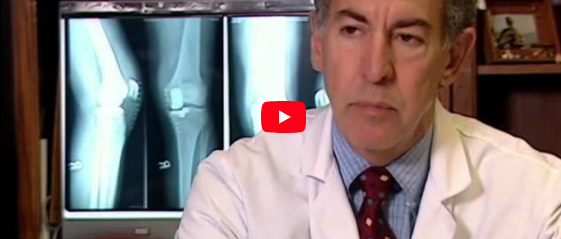


Partial & Total Knee Replacement
The patient with osteoarthritis and severe knee pain not improved by injections and oral medication may be ready for a knee replacement of some type. The patient is ready when that person is tied of the pain and wants to be fixed.
Once fixed that person should be able to discontinue oral meds and injections and be pain free. It is most important the osteoarthritis patient obtain the correct operation for the osteoarthritis pattern present in the knee. Many patient require only a partial knee replacement which is always a smaller and easier to recover from operation than a total replacement.
The knee consists of three compartments that can become bone on bone and need replacement. If only one compartment of the knee is worn out that person may require only a partial replacement. If only the kneecap joint (patellofemoral joint) is worn out that person only requires a patellofemoral replacement. See box at the bottom right of this home page.
People talk about “bone on bone” arthritis as orthopedic doctors use that to expression a lot explaining the condition of advanced osteoarthritis to patient. See photo at the bottom of this page to view the xray of bone on bone.
If only one side of the weight bearing joint of the knee is worn out, that person requires a partial replacement of the weight bearing joint with an Oxford partial replacement.
If one side of the weight bearing joint is worn out and the kneecap joint is also worn, that person requires a total knee replacement. In other words, if only one part of the knee is worn out a partial knee replacement is likely possible. If two parts or all three parts are worn out, that person requires a total knee replacement. Dr. Likover recommends an Intellijoint Total Knee.
A whole, or total, knee replacement may not be necessary for you. Dr. Likover believes in exploring all options available, including advanced partial knee replacement procedures. (click here to learn more about partial knee replacement)
If you are sure you need a total replacement, you should have an Intellijoint total knee replacement. (click here to learn more about Intellijoint total knee replacement)
Contact us today to schedule a consultation, and let’s
discuss all your options.
 Dr. Larry Likover has been practicing orthopedics on the west side of Houston for 43 years, treating knee, hip, shoulder, and back problems. Dr. Likover is board certified in orthopedic surgery and provides knee replacement in Houston for patients worldwide.